

Plastic surgery has always been a field defined by innovation. Every major advance in our specialty was once considered experimental. Microsurgery, autologous fat grafting, acellular dermal matrices, neuromodulators, and biostimulatory injectables all began as new ideas before eventually becoming accepted components of modern practice. Progress in medicine depends upon physicians who are willing to challenge assumptions, develop new techniques, and search for better solutions for their patients.
Innovation, however, carries responsibility. Every product we introduce into clinical practice affects real people, and the consequences of those decisions often extend years beyond the initial treatment. This responsibility is particularly important in aesthetic medicine because the vast majority of procedures are elective. Patients are not accepting risk because they have no alternative. They are choosing treatment in pursuit of improvement, which means physicians have an obligation to demand a high standard of evidence before embracing new technologies.
The history of medicine repeatedly demonstrates that enthusiasm and evidence do not always arrive at the same time. Some innovations ultimately transform patient care. Others fail to deliver on their original promise. A small number reveal complications that were not apparent during the earliest stages of adoption. The challenge for physicians is determining which category a new treatment will ultimately occupy.
This challenge is particularly relevant when evaluating emerging regenerative products such as Alloclae. The biologic concept is intriguing, the early results appear promising, and the potential applications are substantial. However, before any new material becomes widely integrated into routine clinical practice, physicians should ask a simple question: has the evidence caught up with the enthusiasm?
What Is Alloclae?
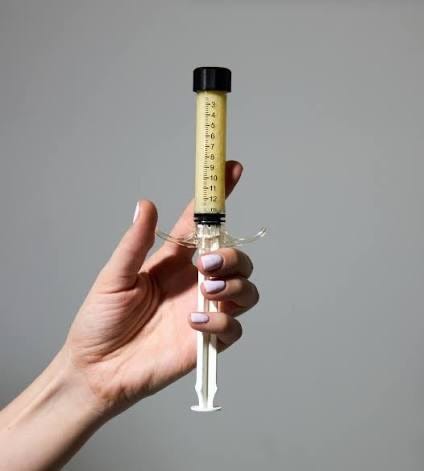
Alloclae is an injectable adipose-derived matrix created from processed donor fat tissue. During manufacturing, cellular components are removed while structural proteins and extracellular matrix elements are preserved. The resulting material is intended to function as a biologic scaffold that supports tissue integration and soft tissue volume restoration.
From a conceptual standpoint, Alloclae occupies an interesting position between traditional dermal fillers and autologous fat grafting. Unlike hyaluronic acid fillers, it is not a synthetic gel. Unlike fat grafting, it does not require liposuction and harvesting of the patient’s own tissue. The theoretical appeal lies in the possibility of providing structural support and volume restoration through an off-the-shelf biologic matrix.
The concept is undeniably attractive. If a biologic scaffold could reliably integrate into tissue, stimulate regeneration, and provide durable volume without the need for surgery, it would represent a meaningful advance in aesthetic medicine. The question, however, is not whether the idea is appealing. The question is whether the clinical evidence currently supports widespread adoption.
The Difference Between a Hypothesis and a Standard of Care
One of the most common mistakes in medicine is confusing a compelling hypothesis with a proven therapy. A biologic mechanism may make sense. Laboratory data may be encouraging. Early clinical experience may appear favorable. None of those factors, however, automatically establish safety or effectiveness in large populations over long periods of time.
The current evidence supporting Alloclae remains limited. The principal peer-reviewed publication on the product is primarily a characterization study that examines its composition, extracellular matrix preservation, and biologic properties. The publication demonstrates that the material retains structural proteins and tissue architecture, but it does not provide extensive long-term human outcomes data.
Much of the biologic rationale for the product is also derived from preclinical studies, including work involving athymic mice. These studies demonstrated tissue remodeling, vascular ingrowth, and cellular infiltration after implantation. Such findings are scientifically interesting and may help explain how the material functions. However, mouse models cannot answer the questions that matter most to patients and physicians regarding long-term human outcomes.
A successful result in a laboratory or animal study should be viewed as the beginning of scientific investigation, not its conclusion. History is filled with therapies that performed well in preclinical models but ultimately failed to achieve comparable success in large human populations.
The Current State of Human Evidence
Perhaps the most important question surrounding Alloclae is not what we know, but what we do not yet know.
The company has discussed an ongoing multicenter clinical study involving approximately fifty patients. While this type of study is an important step in product evaluation, fifty patients represent a relatively small sample size for a treatment that may ultimately be used in thousands or tens of thousands of individuals.
Small studies are useful for identifying obvious safety concerns and generating preliminary outcome data. They are far less effective at identifying uncommon complications, delayed adverse events, or variability across diverse patient populations. A complication occurring in one percent of patients may not become apparent until hundreds of treatments have been performed. A complication occurring in one-tenth of one percent of patients may require thousands of cases before it becomes visible.
The current human experience therefore remains limited. Although encouraging anecdotal reports and early observations have generated excitement, the available evidence has not yet reached the scale typically associated with established standards of care.
The Questions We Still Cannot Answer
The most important questions surrounding Alloclae involve durability, predictability, and long-term tissue behavior.
We do not yet have extensive published human data demonstrating what happens to the material at three years, five years, or ten years after treatment. We do not yet have large-scale studies evaluating retention rates, resorption patterns, palpability, nodularity, calcification, asymmetry, or revision surgery outcomes. We do not yet have comprehensive data describing how the material behaves across different anatomic locations and patient populations.
These uncertainties become particularly important when the material is used in areas such as the breast. Breast tissue requires lifelong surveillance through clinical examination and imaging studies. Any implanted or injected material should therefore be understood not only from an aesthetic perspective but also from the standpoint of long-term imaging interpretation and patient monitoring.
None of these unanswered questions prove that Alloclae is unsafe. They simply illustrate the reality that meaningful uncertainty remains. Good medicine requires acknowledging uncertainty rather than ignoring it.
The Importance of Reversibility
One of the most underappreciated aspects of injectable safety is reversibility.
Hyaluronic acid fillers became widely accepted in part because physicians have access to hyaluronidase, an enzyme capable of dissolving the product when necessary. This capability provides an important margin of safety when treating aesthetic patients.
Biologic matrices operate differently. As these materials integrate with surrounding tissue, reversal may become more complex. If a patient develops an undesired outcome, a delayed inflammatory reaction, or a contour irregularity, correction may not be as straightforward as simply dissolving the product.
The inability to reverse a treatment easily does not necessarily make it inappropriate. It does, however, raise the evidentiary threshold that should be required before widespread adoption.

Regulatory Questions Add Another Layer of Uncertainty
Scientific uncertainty is not the only issue surrounding Alloclae.
Just this week, Business Insider reported that state regulators in New York State halted the distribution of the product within New York and seized Alloclae shipments from at least one physician office. According to the report, state officials alleged that the product was distributed without required state approvals and conducted seizures of product inventory.
This means that Alloclae is currently illegal in New York.
Active regulatory disputes add another layer of complexity to the evaluation of any new medical product. Physicians should always consider not only the scientific evidence supporting a treatment, but also the regulatory environment in which it exists.
What Established Treatments Teach Us
One useful way to evaluate a new technology is to compare it with therapies that have already stood the test of time.
Poly-L-lactic acid has been used clinically for more than two decades and has generated an extensive body of scientific literature. Hyaluronic acid fillers have been administered millions of times worldwide and have been studied across countless patient populations and treatment indications. Autologous fat grafting has accumulated decades of surgical experience and continues to be refined through ongoing research.
These treatments are not perfect. Every intervention carries risk. However, physicians understand their complication profiles because those profiles have been observed, documented, studied, and managed across enormous patient populations.
That level of evidence does not yet exist for Alloclae.
Innovation Should Follow Evidence
The future of regenerative medicine is exciting. It is entirely possible that biologic scaffolds such as Alloclae will ultimately prove to be valuable additions to the aesthetic surgeon’s armamentarium. Future studies may demonstrate excellent safety, predictable integration, durable outcomes, and broad clinical utility.
At present, however, the available evidence remains limited. The published literature consists largely of characterization studies and preclinical data, while human clinical experience remains relatively small and long-term outcomes remain unknown.
Innovation deserves curiosity. Patients deserve evidence. The most responsible path forward is not blind enthusiasm and it is not reflexive skepticism. The most responsible path forward is rigorous science, transparent reporting, long-term follow-up, and a willingness to allow evidence, rather than excitement, to determine the future role of any new technology.
In plastic surgery, the most elegant solution is rarely the newest one. More often, it is the one that has been carefully studied, validated over time, and proven worthy of the trust our patients place in us.
References
Fanniel V, Atawneh I, Savoie J, et al. Advancing Soft Tissue Reconstruction with a Ready-to-Use Human-Derived Adipose Allograft (alloClae). Plastic and Reconstructive Surgery Global Open. 2025.
Full text: https://pmc.ncbi.nlm.nih.gov/articles/PMC12189649/
Kokai LE, et al. Injectable Allograft Adipose Matrix Supports Adipogenic Tissue Remodeling in the Nude Mouse and Human. Plastic and Reconstructive Surgery. 2019.
Business Insider. A hot new filler made from dead people’s fat is being “smuggled” into New York, state regulators say. June 2026.
Dr. Devgan, the layer I keep circling is how the word "biologic" changes the emotional temperature of the question. A material taken from human tissue feels closer to the body, less foreign, before anyone actually knows how it behaves. But origin is not behavior. That something began as tissue tells us nothing about how predictably it will integrate, or how it might distort or complicate care years later.
That matters most in aesthetic medicine, where the patient is accepting risk for improvement rather than necessity, so novelty has to earn trust more slowly than it does in a field with no alternative. A scaffold derived from the body should not get to borrow the body's familiarity before the evidence has shown what it actually does inside the body over time.