
The Myth of the One-Size-Fits-All Facelift
Why Anatomic Literacy and Customization Reign Supreme

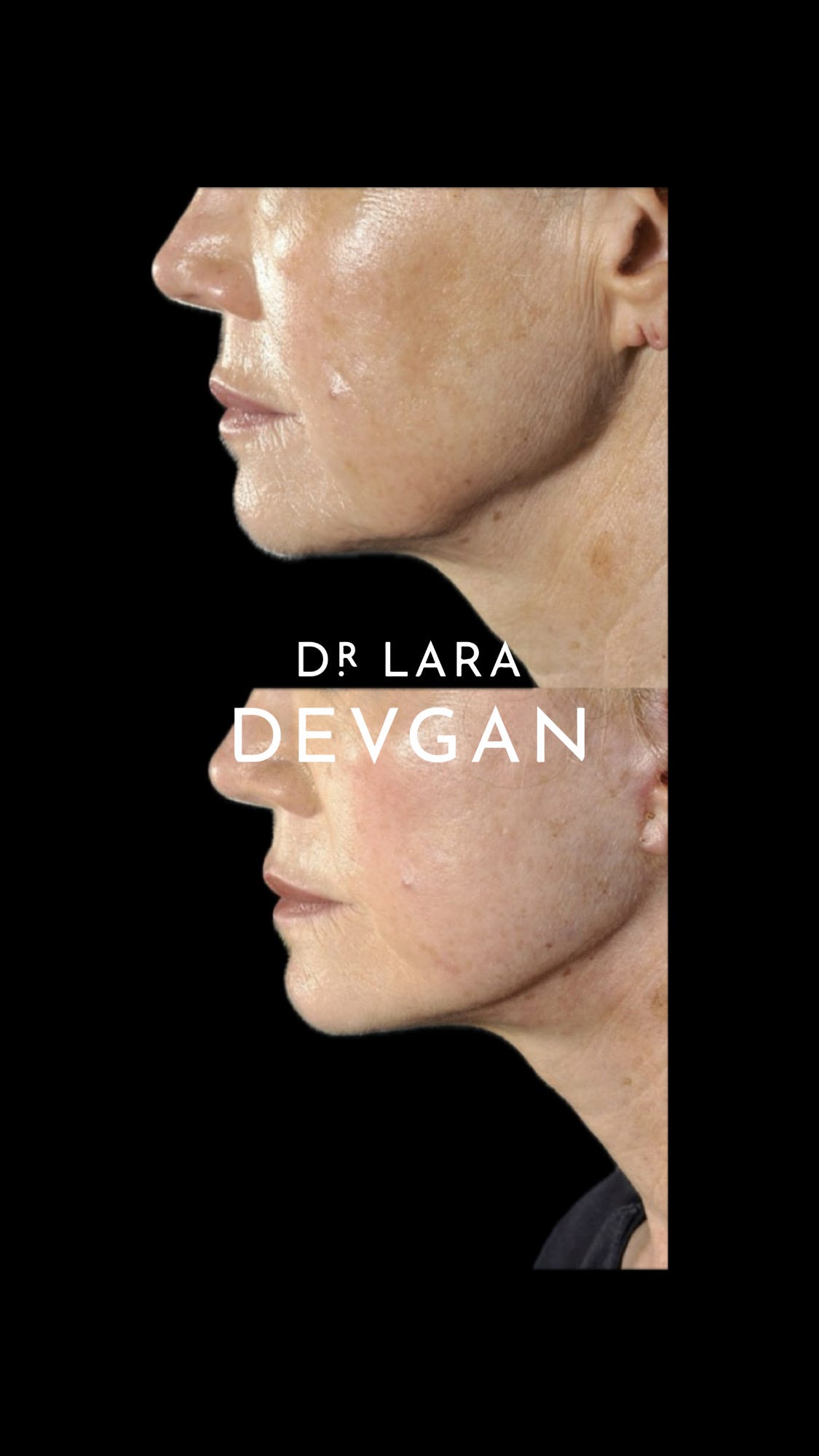
In aesthetic surgery, there is no single operation that fits every face. Yet time and again, patients arrive in consultation asking for “the same lift my friend had.” The truth is that what worked beautifully for one person may be entirely wrong for another. Every face tells a different biological story — one shaped by genetics, bone structure, and time.
A truly refined facelift is not about imitation. It is about precision, restraint, and anatomical literacy — understanding how to operate in all planes, across multiple vectors, to restore balance to a face that has aged according to its own physiology.
The Biology of Facial Aging: A Story Told in Layers
Facial aging unfolds gradually, but its mechanisms are complex. Each layer of the face — skin, fat, muscle, ligaments, and bone — changes in its own way, at its own pace.
Skin thins and loses collagen with age. A landmark study in Plastic and Reconstructive Surgery (Wysong et al., 2019) showed a 20 to 25 percent decline in dermal thickness per decade after midlife, driven by reduced fibroblast activity and chronic UV exposure.
Fat compartments both deflate and descend. Rohrich and Pessa (PRS, 2007) mapped these zones, demonstrating that deep medial cheek volume loss often coincides with jowl hypertrophy — a finding that shaped the way we now approach facial fat grafting and volumetric restoration.
Muscle and SMAS (the superficial musculoaponeurotic system) lose tone and elasticity, contributing to facial descent. Lambros (Aesthetic Surgery Journal, 2016) showed that aging occurs along nonuniform vector patterns — some faces descend vertically, others obliquely — which explains why a vertical lift may be ideal for one patient, but not another.
Retaining ligaments, the fibrous tethers that anchor soft tissues to bone, loosen and stretch with time. Mendelson and Wong (PRS, 2015) found that selective ligament release, when performed thoughtfully, permits natural repositioning of the midface and jawline without over-tightening or distorting expression.
Finally, bone resorption plays a powerful but often overlooked role. Shaw et al. (PRS, 2011) used CT imaging to show that both the midface and mandible undergo age-related retrusion and resorption, flattening facial projection and changing the skeletal frame on which the soft tissue rests.
A facelift that ignores these deeper shifts treats the symptom but not the cause. Aging is a full-depth process; correction must be equally comprehensive.
Why Cookie-Cutter Facelifts Fail
Earlier generations of facelifts focused primarily on skin tightening — an approach that provided temporary smoothing but did not restore youthful structure. The evolution of the SMAS and deep-plane techniques brought major advances, yet even these are not “one-size-fits-all.”
A 2020 meta-analysis in the Aesthetic Surgery Journal reviewing over 5,000 facelift cases found no single technique — SMAS plication, SMASectomy, high-SMAS, or deep-plane — consistently superior. Instead, outcomes correlated with how well each operation was matched to the patient’s individual anatomy and tissue quality.
A delicate woman with fine, thin skin may not need a deep-plane dissection; a patient with thick, heavy soft tissue and ligamentous tethering might benefit from it enormously. The art lies in identifying which plane to address and which vector to lift.

Do Not Generalize From a Friend’s Face
It is natural to seek inspiration from a friend who “looks amazing after her facelift.” But the danger lies in assuming that her solution is yours. Every face differs in ligament structure, fat pad distribution, muscle tone, and bony support. Even the direction of descent varies by facial shape — oval faces age vertically; square faces, diagonally.
A 2022 PRS Global Open study confirmed that individualized surgical planning — not technique or surgeon seniority — was the strongest predictor of natural, satisfying results. In short: your friend’s facelift is her blueprint, not yours.
A skilled surgeon tailors every lift to your anatomy, your tissue behavior, and your aesthetic goals. The goal is not to replicate another person’s result, but to rediscover your own face — rested, confident, and balanced.
The Comprehensive Approach: Surgery Meets Science
Facelift surgery achieves its most natural, long-lasting results when integrated into a full facial optimization plan. Aging is not confined to one region, so neither should correction be.
Midface, lower face, and necklift restore contour and structure
Upper and lower blepharoplasty brighten and rejuvenate the eyes
Brow or temporal lift rebalances the upper third
Lip lift enhances dental show and harmony
Autologous fat grafting restores volume and improves skin texture through stem-cell-rich adipocytes
When these procedures are harmonized, the result is not a “tight” face, but a balanced, three-dimensional rejuvenation that looks refreshed rather than altered.
Nonsurgical Synergy and Long-Term Maintenance
Surgery repositions tissue, but nonsurgical modalities refine and maintain the result. These include:
Structural fillers (hyaluronic acid or calcium hydroxyapatite) to rebuild bone-like projection at the cheekbones and jawline
Neuromodulators to recalibrate depressor activity and maintain lift
Laser resurfacing, microneedling, and chemical peels to improve texture and tone
Biostimulatory injectables such as Sculptra or Radiesse to encourage collagen renewal
A Journal of Cosmetic Dermatology (2021) study found that combining laser resurfacing with facelift surgery improved skin elasticity and tone by 35 percent compared to surgery alone — proof that multimodal rejuvenation yields superior, more natural results.
Precision, Restraint, and the Millimeter Principle
Facial surgery is an art of millimeters. Overcorrection erases character; undercorrection misses opportunity. The difference between natural and artificial often lies in less than one millimeter. The goal is to calibrate rather than transform — to restore what time has taken, not to replace it.
Each incision, each vector of lift, must honor the patient’s anatomy. A beautiful facelift does not announce itself. It whispers, “I feel like myself again.”
Key Findings from the Literature
Contemporary research continues to affirm that customization, not technique, defines success.
Wysong et al. (PRS, 2019) demonstrated that dermal thickness declines by up to 25 percent per decade, necessitating individualized strategies for skin redraping.
Rohrich and Pessa (PRS, 2007) showed that facial fat compartments age independently, underscoring the need for compartment-specific volume restoration.
Lambros (Aesthetic Surgery Journal, 2016) proved that aging vectors differ by face type, validating personalized vector orientation in facelift design.
Mendelson and Wong (PRS, 2015) found that selective ligament release yields more natural repositioning and minimizes tension.
Shaw et al. (PRS, 2011) used CT imaging to demonstrate bone resorption of the midface and mandible, explaining why bony augmentation can enhance surgical outcomes.
A 2020 ASJ meta-analysis found no single facelift technique superior; outcomes depended on patient selection and individualized planning.
A 2022 PRS Global Open multicenter study confirmed that patient-specific surgical design, not technique, was the strongest predictor of satisfaction and longevity.
Together, these findings reinforce a single truth: the most beautiful facelift is the one designed uniquely for you.
Conclusion: The Science of Individual Beauty
Facial rejuvenation is not a template — it is a translation. It translates anatomy into artistry, biology into balance, and precision into confidence. The goal is not to erase history, but to honor it — to let your face tell the same story, only with greater vitality and grace.
Your friend’s facelift is hers. Yours should be different. Beauty, at its highest level, is not standardized — it is bespoke, anatomical, and deeply personal.
Subscribe for weekly essays on surgical artistry, aesthetic science, and the evolving philosophy of beauty.